
Novelty & Resilience
Novelty & Resilience
A practical guide for newly rescued dogs, nervous or fearful dogs, and puppies who find unfamiliar places, people, sounds or experiences difficult.
Click the image to take you to the full article with trackers.
A practical guide for newly rescued dogs, nervous or fearful dogs, and puppies who find unfamiliar places, people, sounds or experiences difficult.
Moving into a new home or exploring an unfamiliar world can be a lot to process. For some dogs, novelty brings curiosity; for others, uncertainty, vigilance or fear. This guide will help you introduce new environments gradually, build predictability and choice, and support your dog as they learn that they can safely notice, explore and recover from new experiences.
WHY NOVELTY CAN FEEL DIFFICULT
For a newly rescued or fearful dog, a new environment isn't just one new thing. It can contain lots of unfamiliar sights, sounds, smells, surfaces, people, animals and movement.
Dogs continually gather information about what is safe, relevant and predictable. When much of the environment is unfamiliar, some dogs become more vigilant and quicker to notice change.
You might see your dog:
stop and stare or scan
startle or bark
freeze or become reluctant to move
pull towards or away from something
seek proximity to you
jump up
struggle to eat or respond to familiar cues
These behaviours are information.
Our aim isn't simply to make a dog look calm. We want to help them feel safe enough to notice, process, make choices and recover.
Help your dog feel safer and more comfortable around things they currently find worrying or uncertain.
When your dog notices something unfamiliar or worrying — such as a person, sound, object, dog or change in the environment — something they value can follow.
For example:
Novel stimulus → food
Over repeated, carefully managed experiences, the novel stimulus can begin to predict something positive.
We don't need the dog to perform a behaviour or “be calm” to earn the food. Here we're working primarily with association and emotion.
At the same time, learning is always happening. Your dog may also discover that looking away, checking back in with you, sniffing or moving away are useful choices.
Important: Counterconditioning works best when exposure is manageable. If your dog is overwhelmed, create more distance or leave the situation.
Goal: Introduce novelty at an intensity your dog can cope with.
Start at a distance, duration or level of intensity where your dog can notice what is happening without becoming overwhelmed.
Rather than asking “Is my dog perfectly calm?”, look for signs that they still have capacity to process.
Can they:
sniff and explore?
take food if they normally enjoy it?
look away or disengage?
respond to familiar cues?
choose to move closer or further away?
recover after something surprises them?
Gradually increase difficulty only when your dog is coping well at the current level.
There is no rush. More exposure isn't necessarily better exposure.
CREATE PREDICTABILITY
New environments are unpredictable. Familiar patterns can give your dog something they already understand.
Useful skills include:
1-2-3 — creates a simple, predictable rhythm.
Up-Down — an easy pattern that can help your dog reconnect with a familiar activity.
Stationing or mat work — provides a familiar place and predictable behaviour.
Find It / scatter feeding — encourages sniffing and can help movement away from something difficult.
Take a Breath — a skill that can be taught separately and later practised in appropriate environments.
Teach these skills somewhere your dog already feels safe before expecting them to use them somewhere difficult.
Feeling able to influence what happens can be incredibly important for a worried dog.
Your dog doesn't have to approach something just because they've noticed it.
Allow them to:
stop and gather information
look from a distance
approach in an arc
move away
sniff
retreat behind you
choose not to interact
Sometimes the most valuable consequence isn't food — it's distance.
Moving away isn't failure. It can help your dog learn:
“I can communicate when something is too much, and my person will listen.”
That's particularly lovely for rescue dogs.
When a dog first comes home, there can be a temptation to show them everything: new walks, visitors, cafés, family members, dogs, shops and busy places.
They don't need to experience everything immediately.
Start with: predictable routines → familiar places → small changes → recovery → slightly more novelty
A quiet five-minute exploration that your dog copes with well may be far more useful than a long walk through an overwhelming environment.
The goal isn't maximum exposure. It's successful experience.
This is especially important for newly rescued dogs whose entire life may have changed at once.
WATCH THE RECOVERY, NOT JUST THE REACTION
A reaction doesn't tell us the whole story.
One dog might:
Notice → startle → look → move away → sniff → recover
Another might:
Notice → freeze → stare → scan → struggle to disengage → remain vigilant
Both dogs noticed something difficult, but their ability to recover was very different.
Watch what happens after your dog reacts.
Recovery might look like:
softer body language
sniffing
shaking off
looking away
re-engaging with you
exploring
taking food normally
returning to their usual behaviour
Resilience doesn't mean never reacting. It includes the ability to recover after something difficult.
We're not trying to teach a nervous dog that they must tolerate everything.
We're helping them develop experiences that tell them:
I can notice something new.
I can gather information.
I have choices.
I can move away if I need to.
My person will listen.
I can recover.
With carefully managed experiences, predictability, choice and appropriate support, a dog's world can gradually become bigger.
Confidence isn't the absence of uncertainty. It's developing the skills and support to cope with it.

Conflicted Communication: We Are Only Human
Conflicted Communication: We Are Only Human explores what might really be happening when we say a dog “knows better” but continues to perform an unwanted behaviour.
“He knows better.”
I hear this quite a lot.
And if you live with an adolescent dog, you've probably thought it at some point too.
You have taught them not to jump up.
You've asked them a thousand times to get off the kitchen counter.
They know they're not supposed to steal the tea towel.
They absolutely know that sandwich isn't theirs.
And yet here you are, standing in the kitchen shouting:
“GET DOWN!”
The dog gets down.
Thirty seconds later they're back up again.
So surely they're being stubborn?
Ignoring you?
Testing boundaries?
Maybe.
But there's another question I'd much rather ask:
«How certain are we that we've actually made the contingencies clear enough for the dog to know what “better” is?»
Because communication isn't simply about what we think we said.
It's about what the other individual has actually been able to learn.
And sometimes those are two very different things.
---
Let's meet our adolescent Labrador
He's nine months old.
It's Saturday morning and the kitchen is busy.
Someone is making lunch. The children are wandering in and out. There's food on the worktop.
Our Labrador puts his paws onto the counter.
Mum says:
“Off.”
Nothing.
“OFF!”
He gets down.
Good.
A minute later, someone leaves half a sandwich too close to the edge.
Up he goes again.
This time...
Jackpot.
He gets the sandwich.
Then he steals a tea towel.
One of the children laughs and chases him.
Fantastic game.
Dad comes into the room.
The dog jumps up at him.
Dad pushes him down.
Later, he jumps at Mum.
She's talking to somebody and absent-mindedly strokes him.
By lunchtime everybody is thoroughly fed up.
“He KNOWS he's not allowed to do this.”
Okay.
Let's freeze the scene.
---
FREEZE.
If we're trying to understand behaviour, one of the simplest places to begin is with the ABC.
A — Antecedent
What happened immediately before the behaviour?
Food was accessible on the worktop.
Someone entered the kitchen.
A person approached.
A tea towel was dangling temptingly from a cupboard handle.
B — Behaviour
What did the dog actually do?
Not:
“He was naughty.”
That's our interpretation.
Instead:
He put two front paws on the worktop.
He picked up the tea towel.
He ran away carrying it.
He put his front paws onto a person's body.
Those are behaviours we can actually observe.
C — Consequence
What happened immediately afterwards?
Sometimes the dog got food.
Sometimes somebody spoke to him.
Sometimes somebody touched him.
Sometimes a child chased him.
Sometimes somebody pushed him away.
Sometimes Mum shouted.
Sometimes nothing happened at all.
And suddenly our apparently simple rule—
“Don't jump up and don't steal things”
—isn't necessarily quite so simple from the learner's perspective.
---
But ABC isn't the whole story
This is where behaviour gets really interesting.
If we only look at the few seconds immediately surrounding a behaviour, we can miss an enormous amount of information.
So let's pull the camera backwards.
Our Labrador didn't sleep particularly well last night.
There were visitors this morning.
The household has been unusually busy.
His normal routine changed.
Perhaps he's uncomfortable.
Perhaps yesterday was unusually exciting.
Perhaps several things have happened recently that have altered how he responds today.
These broader contextual influences can sometimes function as setting events.
A setting event isn't simply the thing immediately before the behaviour.
It can sit further back in time and change the context in which today's behaviour occurs.
And that's useful because behaviour doesn't happen in isolation.
The dog standing in your kitchen at 11am has a history.
---
And what does he want right now?
Now we can add another layer.
Motivating operations.
That sounds horribly technical.
But the question behind it is wonderfully practical:
«Why is this particular consequence valuable to this dog, right now?»
A motivating operation temporarily changes the value of a particular consequence and changes the current likelihood of behaviours that have previously produced that consequence.
Imagine our Labrador hasn't eaten for several hours.
Food may currently have greater reinforcing value.
And what behaviours have previously resulted in food?
Sniffing around the kitchen.
Investigating dropped items.
Putting paws on counters.
Stealing.
Suddenly the sandwich isn't merely an antecedent sitting on the worktop.
We're asking why obtaining that sandwich might be particularly valuable at this moment, and which behaviours have historically worked to obtain food.
And there's an important distinction here:
«Not everything happening in the background is a motivating operation.»
Poor sleep, an unusually busy morning or a change in routine may alter the wider context in which behaviour occurs and could function as setting events.
Hunger, on the other hand, may specifically increase the current reinforcing value of obtaining food and increase behaviours that have previously resulted in food.
Related ideas—but not the same thing.
That's a much richer behavioural picture.
---
And he's an adolescent
We need to include development too.
Because sometimes owners tell me:
“But he was brilliant three months ago!”
I believe you.
Adolescence isn't evidence that all previous training has disappeared.
But behaviour and responsiveness can change during development.
Research has even found a temporary adolescent-phase reduction in dogs' responsiveness specifically towards their caregiver. In one study, adolescent dogs showed reduced responsiveness to a familiar sit cue from their caregiver compared with their earlier performance, without the same pattern towards a stranger.
That doesn't mean every adolescent dog deliberately starts “rebelling”.
It means development belongs in our behavioural picture too.
Your adolescent dog's behaviour today is not necessarily evidence that they have forgotten everything you've taught them.
And performance isn't always the same thing as learning.
---
FREEZE AGAIN.
Let's go back to our counter-surfer.
The family thinks the rule is:
«Don't put your paws on the counter.»
But what might his learning history actually contain?
Counter surfing usually produces nothing.
Sometimes it produces human attention.
Sometimes it makes a human move towards him.
Sometimes somebody shouts.
And every so often...
HAM SANDWICH.
That matters.
A behaviour doesn't have to be reinforced every single time to persist.
In fact, intermittent reinforcement can maintain remarkably persistent behaviour.
So perhaps our Labrador hasn't failed to learn.
Perhaps he's actually learning extremely successfully.
The problem is:
«He isn't necessarily learning what the humans think they're teaching.»
---
Now let's add the shouting
This is where I want to be careful.
Because it's very easy for dog-training discussions to become:
“NEVER SHOUT AT YOUR DOG.”
And then somebody shouts at their dog and feels awful.
We're human.
We get tired.
We become frustrated.
We have bad days.
And sometimes an adolescent Labrador steals the sandwich you've been looking forward to eating since 10am.
You might shout.
I'm not interested in making anybody feel terrible about that.
But I am interested in what shouting adds to the communication.
Dogs don't process only the dictionary definition of our words.
They attend to a much bigger communicative picture including voice, body movement, gestures, facial information and context.
Research shows that dogs respond differently to emotional information contained in human vocalisations, and recent work has found greater stress-related responses to high-arousal negative human vocalisations.
Other research looking more broadly at aversive-based dog training has found dogs exposed to greater proportions of aversive methods showing more stress-related behaviour and tense behavioural states during training. Dogs in the highest-aversion group also showed greater post-training cortisol increases and more pessimistic responses to ambiguity than dogs trained using reward-based methods.
That doesn't mean:
“You shouted once, therefore you've damaged your dog.”
The science doesn't justify that statement.
But it does mean that emotional tone isn't necessarily irrelevant background noise.
It's part of the information available to the dog.
---
Predictability matters
Imagine performing the same behaviour tomorrow.
Sometimes somebody laughs.
Sometimes somebody strokes you.
Sometimes somebody pushes you.
Sometimes somebody shouts.
Sometimes you get chased.
Sometimes you get food.
Sometimes nothing happens.
What predicts which outcome is coming?
This brings us to two really useful concepts:
Predictability and controllability.
Predictability is essentially:
«Can I work out what's going to happen?»
Controllability asks:
«Can my behaviour reliably influence what happens next?»
Those ideas are fundamental to how animals learn about their environment.
And this is why I prefer the term conflicted communication to simply telling owners to “be consistent”.
Because consistency doesn't mean every person must behave identically every second of every day.
Dogs are very capable of learning context.
Perhaps jumping works with Granny but not Dad.
Perhaps one cue applies at the front door and another in the garden.
Those differences can themselves become predictable.
The problem becomes more interesting when apparently similar situations produce very different outcomes without reliable signals telling the learner which outcome is coming.
Research involving more than 1,200 dog owners has found an association between greater consistency in owner behaviour and better reported obedience. Because this was questionnaire research, it can't prove that inconsistency caused poorer obedience.
But it certainly gives us reason to think carefully about the clarity of the learning environment we're creating.
---
“But I told him OFF.”
And perhaps you did.
But let's look at what else happened.
You said:
“Off.”
Then:
“OFF.”
Then:
“I SAID GET DOWN.”
You moved towards him.
Your shoulders changed.
Your face changed.
Your voice changed.
Your speed changed.
Your hands moved.
Perhaps you reached for his collar.
Perhaps you pointed.
Perhaps you pushed him.
And perhaps eventually he got down.
Which part of that sequence actually predicted the outcome?
Was “Off” the cue?
Or was it:
«quiet Off → louder OFF → human approaches → body becomes tense → hand reaches → dog moves?»
That's a very different learning history.
Sometimes when owners tell me:
“He won't do it unless I shout.”
I wonder whether the dog hasn't learned that shouting is necessary at all.
Perhaps we've accidentally taught:
«The first few cues don't really matter yet.»
---
FREEZE.
Now here's my favourite part.
We've spent all this time analysing the dog.
His antecedents.
His learning history.
His setting events.
His motivation.
His consequences.
His developmental stage.
But there's another learner standing in that kitchen.
You.
So let's analyse the human.
You didn't sleep brilliantly either.
You're late.
The children are arguing.
You've already removed two socks from the dog's mouth.
Someone left food on the counter after you've repeatedly asked them not to.
You're hungry.
You're trying to make lunch.
And now...
THERE'S A LABRADOR ON THE WORKTOP AGAIN.
“GET DOWN!”
The dog gets down.
And you experience immediate relief.
Interesting.
Because consequences change human behaviour too.
Your shouting was followed by the dog getting down.
So what might happen next time?
You may be more likely to shout again.
Because it worked.
Suddenly we're not looking at a badly behaved dog and a frustrated owner.
We're looking at:
«Two learners influencing one another's behaviour.»
The dog's behaviour changes the human's behaviour.
The human's behaviour changes the dog's behaviour.
Both have learning histories.
Both have motivations.
Both experience setting events.
Both respond to consequences.
We are only human.
---
So what do we do instead?
Not:
“Never become frustrated again.”
That's unrealistic.
And not:
“Your dog must obey every cue immediately.”
Instead, start looking for clarity.
When the unwanted behaviour occurs, ask:
What exactly happened immediately beforehand?
What did my dog actually do?
What happened afterwards?
Then pull the camera backwards.
What has happened earlier today?
Is anything different about my dog's physical or emotional state?
What is particularly valuable right now?
What has this behaviour achieved previously?
What alternative behaviour have I actually taught?
Is that alternative behaviour sufficiently reinforced?
Does my dog understand the cue—or do they understand my whole sequence of gestures, food movements, repeated words and increasing volume?
And perhaps most importantly:
«What behaviour would I like my dog to do instead?»
Because “don't counter surf” isn't a behaviour.
“Don't jump” isn't a behaviour.
“Stop being annoying” definitely isn't a behaviour.
😂
Give the learner something they can do.
Four feet on the floor.
Go to a mat.
Move away from the worktop.
Bring an object to you.
Check in.
Come with you.
Settle somewhere appropriate while food is being prepared.
And then make that behaviour worth repeating.
---
Clear doesn't mean perfect
You will occasionally reinforce something you didn't mean to.
Someone will leave a sandwich on the counter.
Grandad will encourage jumping despite everything you've said.
You'll accidentally reach for the treat pouch before giving the cue.
You'll repeat yourself.
You'll get frustrated.
And yes...
Sometimes you'll shout.
One imperfect interaction doesn't define your relationship with your dog.
But when things start going wrong repeatedly, rather than simply becoming louder, stricter or more frustrated, it can be enormously helpful to ask:
«What information is my dog actually receiving?»
Not what did I intend to teach?
What did the consequences actually teach?
What predicted them?
What behaviour worked?
What was valuable at that moment?
And what else was happening in the dog's world?
Because sometimes the dog who apparently “knows better” is responding perfectly logically to a learning history we didn't realise we'd created.
So the next time you find yourself saying:
“Why aren't you listening to me?”
try asking:
«“What am I teaching you right now?”»
There are two learners in this conversation.
And neither of them has to get it right all of the time.
We are only human.
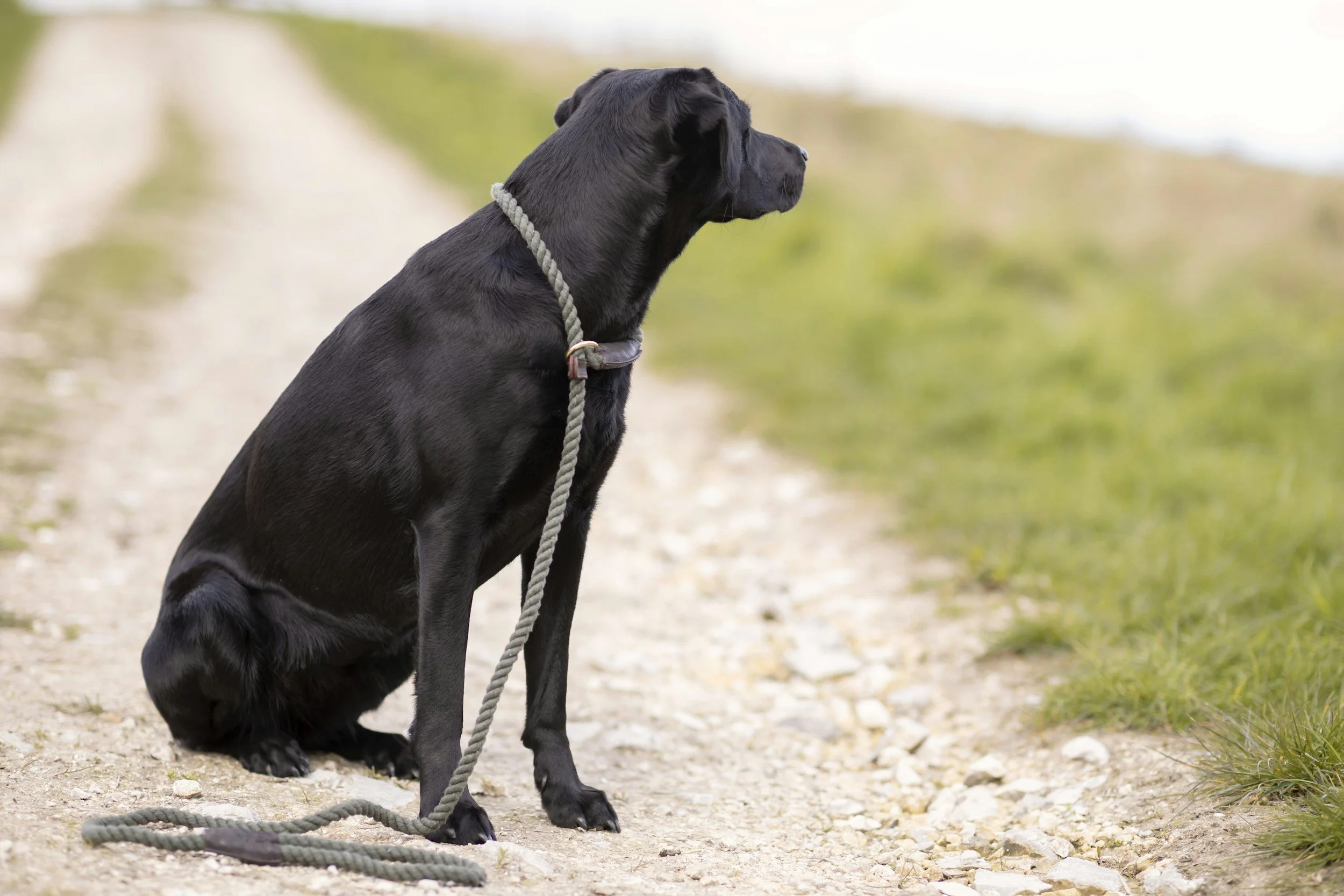
Slip Leads: Useful Tool or Training Shortcut? What the Evidence Actually Tells Us
A time and a place..
I own slip leads. I also don't use them to teach dogs not to pull.
Those two statements aren't contradictory.
Slip leads can be incredibly useful pieces of equipment.
They're quick. They're simple. They don't rely on an existing collar being secure. They have legitimate applications in working-dog handling, rescue, temporary restraint and emergency situations.
My problem isn't the existence of a loop of rope.
It's what happens when tightening that loop around a dog's neck becomes the lesson.
And perhaps the most useful question we can ask about any piece of dog-training equipment isn't:
“Is this tool good or bad?”
It's:
What function is this equipment performing here?
Because the same slip lead can function as a temporary safety device in one situation and as an aversive behaviour-modification tool in another.
Those aren't the same thing.
What actually is a slip lead?
A slip lead combines a collar and lead into one piece of equipment.
One end passes through a loop to form a larger loop around the dog's neck. Unlike a conventional fixed collar, that loop can become smaller when tension is applied and loosen when tension disappears.
That gives the slip lead one very obvious practical advantage:
speed.
There is no buckle to fasten or D-ring to find.
Put it over the dog's head and the dog is attached.
That helps explain why slip leads have become established in several specialist contexts.
Temporary restraint
If somebody needs to secure an unfamiliar loose dog, they may have no idea whether the dog's existing collar fits properly, whether its buckle is secure or whether the dog can reverse straight out of it.
A slip lead can provide immediate restraint without relying upon that equipment.
Kennel, rescue and dog-control situations
For similar reasons, slip leads can be useful for briefly moving suitable dogs from one secure area to another.
Working gundogs
They also make practical sense in working situations where a dog may repeatedly transition between being restrained and working freely.
A retriever may need to be held, released to retrieve, return, move again and subsequently be released.
A lightweight lead that can be removed and replaced rapidly has an obvious practical advantage.
None of that is particularly controversial.
But notice the function in all of those examples.
The lead is primarily being used for:
management, safety or temporary restraint.
That's quite different from deliberately using the tightening action to change behaviour.
A slip lead isn't automatically an aversive training tool
This distinction matters.
Imagine a trained dog walking next to somebody on a completely loose slip lead.
There is virtually no tension.
The dog walks twenty metres from a vehicle to a secure working area.
The lead comes off.
The dog may have experienced little meaningful constriction at all.
Now imagine another dog.
The dog moves forwards.
The lead tightens.
The dog slows.
The pressure disappears.
The dog moves forwards again.
The lead tightens again.
Eventually the dog learns to modify their movement to avoid or terminate the pressure.
Same piece of equipment.
Different function.
If pressure is applied and a behaviour causes that pressure to stop, and that behaviour subsequently becomes more likely, we can describe that contingency as negative reinforcement.
If a lead correction is applied following a behaviour and that behaviour subsequently becomes less likely, the correction has functioned as positive punishment.
Those terms aren't moral judgements.
They're descriptions of learning contingencies.
Which means saying:
“It's just communication.”
doesn't really answer the question.
Of course pressure can communicate information.
But we can still ask:
What made the dog's behaviour change?
If the answer is:
“The dog learnt that doing X makes the pressure stop,”
then pressure isn't merely carrying information.
Its removal is reinforcing behaviour.
But surely a little pressure around the neck isn't harmful?
This is where we actually have some useful research.
In 2020, Carter, McNally and Roshier investigated pressures generated by seven different collars and a slip lead.
Importantly, they didn't deliberately expose living dogs to potentially injurious forces. They created a simulated canine neck fitted with pressure sensors.
They then applied forces representing:
a firm pull;
a strong pull;
and a jerk.
Measured pressures across the different collar types and forces ranged from 83 kPa to 832 kPa.
Both the equipment used and the force applied significantly influenced the pressure exerted on the simulated neck.
And their conclusion is important:
none of the collars they tested produced pressure sufficiently low to eliminate the potential risk of injury when pulling occurred.
That doesn't mean:
“Every dog wearing a slip lead will suffer a neck injury.”
It doesn't even mean that flat collars are inherently safe while slip leads are inherently dangerous.
The research actually gives us a more useful message:
The neck isn't an ideal place to repeatedly absorb significant lead forces.
And with a slip lead we have the additional characteristic that the loop itself can reduce in circumference as tension occurs.
That makes me particularly cautious about using one on dogs who regularly:
pull;
lunge;
hit the end of the lead;
react strongly;
receive lead corrections;
or spend significant portions of their walk under tension.
Neck pressure doesn't necessarily affect only the neck
Another interesting study looked at intraocular pressure — pressure inside the eye.
Pauli and colleagues measured the force individual dogs generated while pulling and then compared what happened when equivalent pressure was applied through a neck collar versus a harness.
Pressure applied through the collar produced a significant increase in intraocular pressure.
The harness did not produce the same effect.
The researchers therefore recommended harnesses particularly for dogs where increased intraocular pressure could be problematic.
Again, let's be careful with what that means.
It does not demonstrate that:
“Slip leads damage dogs' eyes.”
But it does demonstrate something important:
Mechanical pressure around the neck can have physiological effects beyond the skin directly underneath the equipment.
That's worth considering when choosing where we want lead forces to be distributed.
What about all the other health claims?
Search online and you'll find claims that slip leads cause:
thyroid disease, vagus-nerve damage, cervical subluxation, collapsed tracheas, laryngeal paralysis, spinal damage and numerous other conditions.
Some mechanisms may be biologically plausible under particular circumstances.
But that isn't the same thing as having evidence that ordinary slip-lead use causes those diseases.
I haven't found sufficiently good evidence to make those claims.
And we don't need to.
There are already legitimate questions about pressure, comfort, learning and welfare without turning plausible mechanisms into proven diagnoses.
Evidence-based practice also means being willing to say what the evidence doesn't demonstrate.
“But my dog doesn't pull.”
Then we're talking about a rather different situation.
If a trained dog genuinely travels on a loose slip lead and rarely produces tension, the argument about repeated constriction becomes considerably weaker.
Equipment doesn't exist independently of the behaviour occurring around it.
But this raises an interesting question.
If a slip lead is harmless because your dog never pulls, why are slip leads so often recommended specifically for dogs who do?
That's where the argument starts to change.
If we're choosing the equipment precisely because its tightening action makes pulling less successful or comfortable, then its constricting property isn't incidental anymore.
It's part of the training contingency.
“But I barely use any pressure.”
Perhaps.
But the amount of visible handler effort doesn't necessarily tell us how salient the sensation is to the dog.
This becomes particularly interesting when slip leads are positioned high on the neck, immediately behind the ears.
One argument for this position is that relatively small movements provide greater control over the dog's head.
But if very small amounts of force in a particular location produce substantial behavioural changes, we still need to ask why.
Less visible handler effort doesn't automatically equal a less aversive experience for the dog.
We currently don't have good experimental evidence allowing us to assign a precise subjective experience to different positions of a slip lead.
So I wouldn't claim:
“High placement definitely hurts more.”
But equally, “I'm hardly applying any force” isn't evidence that the dog experiences nothing significant.
Does pressure-and-release work?
Yes.
This is another area where dog-training conversations can become unnecessarily polarised.
Punishment can reduce behaviour.
Negative reinforcement can increase behaviour.
If they couldn't, they wouldn't be recognised learning processes.
So:
“But it works.”
isn't really the interesting question.
The more useful questions are:
What did the dog learn?
What emotional experience accompanied that learning?
What other behaviours might also have been affected?
And could we achieve the behaviour we want without relying upon an unpleasant consequence?
Research comparing companion dogs trained predominantly using reward-based versus aversive-based methods gives us good reason to take those questions seriously.
Dogs exposed to higher proportions of aversive training have been observed displaying more stress-related behaviour, more tense behavioural states, increased post-training cortisol and, in one study, more pessimistic responses during a later cognitive-bias task.
That doesn't demonstrate that every moment of pressure from a lead causes psychological harm.
But it does challenge the idea that we should choose aversive contingencies simply because they can suppress behaviour.
What happens with a reactive dog?
This is where I become particularly cautious about constriction-based equipment.
Imagine a dog who is worried by unfamiliar dogs.
Another dog appears.
Our dog looks.
Their arousal rises.
They move forwards.
The slip lead tightens.
Perhaps the handler pulls them backwards.
The other dog disappears.
Next walk:
Dog appears.
Arousal.
Neck pressure.
Restraint.
Dog appears.
Arousal.
Neck pressure.
Restraint.
We shouldn't leap from that sequence to:
“Slip leads cause reactivity.”
There isn't evidence supporting such a simple causal claim.
But from a learning perspective, I still have a very reasonable question:
Do I want an unpleasant or highly salient physical sensation repeatedly occurring in close temporal association with the very stimulus I'm trying to change the dog's emotional response towards?
For me, particularly when working with fearful, anxious or reactive dogs, the answer is no.
I'd rather create distance, alter the environment, work below threshold where possible, reinforce useful responses and change the dog's experience of the trigger.
Restraint can matter even without pain
There is another part of this discussion that can get lost when everybody argues about whether a slip lead “hurts.”
Imagine a dog sees something they desperately want to investigate.
Their motivation says:
GO.
The lead says:
STOP.
The dog tries harder.
Restraint increases.
They try harder again.
Now we may have:
motivation → blocked access → increased effort → increased restraint → frustration.
That matters particularly for dogs already prone to frustration-related behaviour such as:
barking;
lunging;
jumping;
spinning;
lead grabbing;
or redirected mouthing.
Sometimes the question isn't:
“How do I make this dog stop fighting the lead?”
It's:
“What is the dog trying to do, why is it important to them, and what is our restraint doing to their emotional state?”
And now we need to talk about group dog walks
This is one of my biggest concerns about the routine use of slip leads.
Picture one professional walker with several dogs.
One dog catches a scent and slows down.
Another keeps moving.
One wants to investigate the verge.
Another spots a dog across the road.
A third stops.
Two accelerate.
The walker needs everybody moving in roughly the same direction.
These dogs aren't necessarily “pulling badly.”
They're simply behaving as different individual dogs.
And this matters because real-world leash-tension research demonstrates that tension isn't something generated exclusively by naughty dogs pulling forwards.
Forces occur at both ends of the lead.
Researchers using a leash-tension meter were able to distinguish pulling events initiated by dogs from those initiated by handlers.
Young dogs pulled more frequently. Larger dogs produced greater tension. Handler forces also contributed substantially to the interaction.
So consider what happens when several dogs attached by slip leads need to move as one unit.
One dog wants to sniff.
The group continues.
Tension.
One dog pauses.
The group continues.
Tension.
One dog moves sideways.
The handler continues forwards.
Tension.
One dog becomes excited and accelerates.
The handler restrains them.
Tension.
Another dog responds to that dog's movement.
More movement.
More restraint.
And because the attachment is a slip lead, those forces are transmitted through a loop capable of tightening around the neck.
This is different from deliberately jerking a dog's lead.
But from the dog's body, force is still force.
“But they're under control.”
They may well be.
But I think we need to separate two questions:
Can I control these dogs?
and
Are these dogs experiencing a good walk?
Those aren't automatically the same thing.
Walking isn't simply transportation from A to B.
Dogs gather enormous amounts of information through olfaction.
They stop.
Investigate.
Backtrack.
Change pace.
Move laterally.
Follow scent.
Pause.
Choose.
Research into nosework has found that giving dogs opportunities to use olfaction and make active choices can contribute positively to welfare and has produced more optimistic responses in cognitive-bias testing.
That doesn't prove that preventing a dog from sniffing causes poor welfare.
But it certainly gives us reason to treat olfactory exploration and agency as meaningful, rather than inconveniences that need controlling.
So if one dog wants to spend thirty seconds investigating a scent while five others are required to continue walking, something has to give.
Perhaps the group waits.
Perhaps the dog abandons the sniff.
Perhaps the handler applies tension.
Perhaps the other dogs create tension through their movement.
And that's where the equipment matters.
The group itself can change the dog's behaviour
There's another layer.
Dogs don't move through the world independently of one another.
One dog suddenly orientating can cause others to orient.
One accelerating can affect everybody else's movement.
Excitement can spread through a group.
So the amount of physical control needed to keep several dogs travelling together may change dynamically throughout the walk.
That doesn't mean group dog walking is inherently bad.
Nor does it mean every professional dog walker using a slip lead is harming dogs.
But I think it creates an important welfare question:
If the walking system requires repeated neck pressure whenever an individual dog deviates from the movement of the group, is that the equipment we want to use?
And perhaps an even bigger question:
How much individual choice can each dog actually have when several dogs are required to move as one unit?
What about gundogs?
This is probably the most reasonable challenge to criticism of slip leads.
Working gundog handlers have practical reasons for using them.
A trained retriever may spend relatively little time restrained.
The lead may remain completely loose.
It needs to come off quickly when the dog is sent to work.
Bulky equipment may be unnecessary.
Fine.
But:
“This equipment is extremely convenient for this specialised working context”
doesn't establish:
“This is therefore the best equipment for an adolescent pet Labrador pulling around an housing estate for 45 minutes.”
Those are completely different jobs.
Equipment should be assessed according to what it is doing in that particular context, not according to the tradition attached to it.
Slip leads can also provide a genuine safety advantage
There are circumstances where a dog simply needs securing immediately.
An unfamiliar stray.
A newly transported dog.
A dog whose existing collar can't be trusted.
A temporary transfer between secure locations.
In those circumstances, the ability to place a lead directly around the dog without relying on their existing equipment can be extremely useful.
Again:
function matters.
Using a slip lead for thirty seconds to prevent an unknown dog escaping isn't equivalent to using repeated neck pressure to teach heelwork.
We don't improve animal welfare by pretending those situations are identical.
Harnesses aren't magically harmless either
This article isn't an argument for:
SLIP LEAD BAD. HARNESS GOOD.
A badly fitted harness can rub, rotate, restrict movement, be escaped from or be extremely unpleasant for a dog who finds equipment handling difficult.
Harness design and fit matter.
So does the individual dog.
My preference is to choose equipment that:
keeps the dog and human safe, minimises unnecessary pressure, permits comfortable movement and doesn't need to function as the primary behaviour-change mechanism.
Then we teach the behaviour separately.
So when is a slip lead a problem?
I find it useful to think about three broad functions.
🟢 MANAGEMENT
Loose dog found somewhere unsafe.
Slip lead on.
Dog secured.
Dog moved somewhere safe.
Lead removed.
The purpose is temporary restraint and safety.
🟠 SAFETY OR SPECIALIST HANDLING
A trained working dog travelling briefly on a loose slip lead.
Temporary handling or transfer.
An unusual situation where rapid attachment/removal has a genuine practical advantage.
The constricting action isn't deliberately being used to modify behaviour.
Context matters.
🔴 BEHAVIOUR MODIFICATION
Dog pulls.
Lead tightens.
Dog slows.
Pressure disappears.
Or:
Dog reacts.
Handler applies a correction.
Reaction stops.
Or:
Dog repeatedly attempts to move away from the handler's preferred position and neck pressure is used to keep them there.
Now the tightening isn't incidental.
It's part of the contingency changing behaviour.
And that's where I think we should ask whether we can do better.
So what should we do with dogs who pull?
Teach them.
Loose-lead walking isn't something dogs arrive knowing.
Human walking is actually rather strange from a dog's perspective.
We want an animal with a different natural pace, extraordinary olfactory abilities and plenty of reasons to investigate their environment to travel at our speed, in our direction, within approximately two metres of us.
That's a considerable learned skill.
So let's teach:
orientation to the handler;
reinforcement around the position we want;
moving together;
changes of direction;
slowing and stopping;
responding to lead information without requiring force;
environmental rewards;
opportunities to sniff;
appropriate access to things the dog values;
and gradually working around increasing distractions.
And let's make sure the dog also gets walks where walking nicely isn't the entire point.
Sniff.
Explore.
Move.
Investigate.
Be a dog.
The question I want us to start asking
Perhaps we've spent too long arguing about whether particular pieces of equipment are inherently “good” or “bad.”
I think there's a better question.
Next time you see a slip lead — or indeed any training equipment — ask:
What function is this equipment performing here?
Is it simply keeping the dog safe?
Is it temporary management?
Is it specialist equipment being used loosely by a dog already trained for the situation?
Or:
Does something uncomfortable happen when the dog makes the “wrong” choice?
Because if the dog's behaviour changes primarily because pulling makes something tighten around their neck, the lead hasn't magically taught loose-lead walking.
The consequence has changed the behaviour.
And yes, that may work.
But “does it work?” shouldn't be the end of our welfare conversation.
We can ask something better:
What is the dog learning?
What are they experiencing while learning it?
What other associations might we be creating?
What opportunities for normal behaviour are being lost?
And:
Could I teach this another way?
For me, in everyday dog training, the answer to that last question is overwhelmingly:
Yes.
References and further reading
Carter, A., McNally, D. & Roshier, A. (2020). Canine collars: an investigation of collar type and the forces applied to a simulated neck model. Veterinary Record, 187, e52.
Pauli, A.M., Bentley, E., Diehl, K.A. & Miller, P.E. (2006). Effects of the application of neck pressure by a collar or harness on intraocular pressure in dogs. Journal of the American Animal Hospital Association, 42(3), 207–211.
Shih, H-Y. et al. (2020). Behavioural Evaluation of a Leash Tension Meter Which Measures Pull Direction and Force during Human–Dog On-Leash Walks. Animals, 10(8), 1382.
Vieira de Castro, A.C. et al. (2020). Does training method matter? Evidence for the negative impact of aversive-based methods on companion dog welfare. PLOS ONE, 15(12), e0225023.
Duranton, C. & Horowitz, A. (2019). Let me sniff! Nosework induces positive judgment bias in pet dogs. Applied Animal Behaviour Science, 211, 61–66.
American Veterinary Society of Animal Behavior. Humane Dog Training Position Statement.

Stop with the leash pops!
It all begins with an idea.
Why are they used;
To stop your dog pulling on the lead. popping a leash is intended as a way to deliver an attention-getting correction and instantly change your dog’s behaviour.
I've been seeing this technique used while driving around in varying contexts. Some while waiting to cross a road while getting the dog to sit (I am not a fan of this, there is no need. How will the dog feel when its older and sitting is uncomfortable? Sitting makes dogs feel vulnerable, is it a helpful position to put your dog in?).
I see some when walking along a road.. a pop whenever the dog walks to far ahead, always inconsistent on the owners part, sometimes the dog is just in front sometimes its a head in front, others a whole body length. Inconsistencies in training is why training doesn't work as well.
On my news feed, adds of trainers pop up, and the worst thing of all is how trainers recommend using leash pops with dog reactivity! That's extremely worrying that now days with all this science backed knowledge its used in that context.
I truly feel sorry for humans who are looking for advice on line, its a mine field. I think my best advice for that is trust your gut. Does it feel right? Is it something you feel comfortable doing? And look at the dogs that its being used on, mute the video and just watch them.
What ever i train its always influenced on how the dog is feeling doing it, i change techniques alot to suit. The dog needs to feel comfortable.
Im guessing its trainers like Ceaser Milan who made these things popular. Although trainers have used aversive techniques long before him.
FROM A TRAINER WHO USES THEM;
"Pops: A "pop" is a short burst of leash pressure. The amount of pressure is adjustable but it must be fast, a micro second. Pops are one of the hardest leash skills to learn but are beneficial when you need a quick communication that the dog doesn't have time to resist. For example: When teaching a dog to stop pulling on the leash, if you use restraints or pulls, most dogs will pull against it. With a pop there is no time for resistance because the pop comes and goes in a flash".
Some trainers recommend conditioning it, so pairing it with a reward. Pain-reward, pain-reward.. thats positive punishment right there for you.
Getting the dog used to the pressure of the pop so they'll fight it less as time goes on... but will they??! Nooope!
Sooooooo....
Why does it work.
Well, it doesn't, i should rephrase that why does it APPEAR to work, ah easier question to answer.
Its a sharp pull upwards, its designed to be so quick that a dog can't use resistance against it, so it appears that the dog snaps out of his freeze pose or out of his pulling stance and flips back to you asap.
What does it actually do?
It causes the dog to offer an avoidance behaviour, the dog wants to avoid the discomfort and in alot of cases pain.
It can even create a sense of learned helplessness because it takes away the dogs options of natural movement, natural dog behaviour.
You know what else it can do??? Dogs learn via association, yep, its that word again, I use it alot. So whats the dog associating with that sharp uncomfortable action.. what ever the dog was looking at!! Now if that technique is used to correct a dog whos leaning towards another dog or human you've paired it with an uncomfortable feeling or pain you've just paired the two together and creating a world of hurt!!
They think it'll stop the dog looking at another because it will learn it needs to avoid the pain. Well it won't last. A reactive dogs reaction comes from their amygdala, that happens so quickly and its driven by chemicals that are reacting to what they see. Probably with a long learnt history attached too. A leash pop won't win over that each time, the contexts will be varied each time.
The dog has been placed in a difficult situation, their main goal is to survive, the trigger is viewed as a threat to that need and yet a leash pop is an injury they want to avoid too! Always think dog.
Lead training , management techniques and countercondition will. We give the dog another option, we give them help to manage with what they are struggling with. We build confidence and resilience and we build extremely good communication skills doing so. Way better then you can ever hope for by doing a leash pop. The neck is made up on many small parts, the thyroid gland can easily be damaged by a small jerk of the lead. IT can cause laryngeal paralysis. The neck and cervical spine are one of the most important energy channels in the body, damage to the vagus nerve which controls internal organs. One leash pop can cause huge lifelong damage.
Yes lead training is such a hard thing to teach, because it takes time and mainly because you want to just go for a walk.
But when you're dog doesn't know how to walk nicely on a lead you can't "just go for a walk" it causes frustration on both parts
I suggest to my clients to use a long line and a harness for walks, and lead training sessions on a collar and lead. Use key words or phrases to associate the difference, lead time is my preferred cue, heel when they need to be next to your side.
Training sessions only need to be 5 minutes at a time as often as possible, as time goes on your sessions will increase in duration.
You truly do not need to do "leash pops" its damaging to your relationship and damaging to them physically and emotionally.
4 week lead training course available so you an avoid using Leash

What’s in a smell?
It all begins with an idea.

The canine nasal airway. (a) Three-dimensional model of the left canine nasal airway, reconstructed from high-resolution MRI scans. (b) The olfactory recess is located in the rear of the nasal cavity and contains scroll-like ethmoturbinates, which are lined with olfactory epithelium. The olfactory (yellowish-brown) and respiratory (pink) regions shown here correspond to the approximate locations of sensory (olfactory) and non-sensory (squamous, transitional and respiratory) epithelium, respectively (Craven et al. 2007).
I open the door to let Aubrey out before bed, she stands there in the doorway body still, lifts her head up slightly her ears drop back her eyes seem to narrow as if in concentration and her little nose is twitching in every direction, I can hear her sniffs, lots of them like chugging train.
I sit beside her wondering what it is she can smell, I take one big sniff in, yet cannot work out what is I am smelling, maybe a fresh scent of the night air, maybe if I close my eyes it will help. One more big sniff in, this time with my eyes closed, I seem to feel instead of noticing any smell, I feel the cold inside my nostrils. A few more deep sniffs in and breaths out I am actually feeling quite relaxed, I feel my shoulders drop. Glancing down to look at Aubrey I notice she is already gone; I hear her in the field running after scent trails with the occasional loud half sneeze after taking into many scent molecules and wanting to clear them out, I am guessing from all those tunnels a mouse has made in the grass.
All I can see is lights from the far away towns, all I can hear is Aubrey running and the cars in the distance on the dual carriageway and all I can smell is now my own hand moisturizer after warming my nose back up!
To think what Aubrey can smell, see, and hear really is mind blowing.
Standing in the doorway she must have seen pictures in the dark, a trail of a fox scent over to the right, A pheasant late to bed visualized by scent alone. The neighbours dogs who went out earlier and every spot that they toileted in and the direction they went in, as scent does mark time the last paw print leaving more odors than the ones in front. I wonder if it was as clear as looking at a picture.
My sister owns a Beagle who has over 300 million receptor sites compared to our mere 6 million!! I do feel sorry for him at times as there must be limited time to rest when faced with an overwhelming selection of smells to digest. Going into a kitchen must be like food heaven or hell as he is not allowed to eat what he can smell, just his bland kibble! You can see the appeal to counter surfing for dogs when they know what's up there. If you own a hound you may notices they sneeze more than other breeds to clear the remaining scent molecules out. Donnie has a little sneezing session quite regularly.
Us humans become used to a smell, we say we become nose blind to it, like me to the inside of my truck! It smells normal to me but every person who sits it in comments straight away about its awful smell (very rude to suggest my dogs and I smell). But dogs do not get nose blind, a scent is always noticeable. They have a part of their nose called a vomeronasal nasal organ which helps. It is a small bone where the sensory cells sits in small chambers, you have seen a male dog obsessed with a spot we all know has a female calling card on it, the male could not push his nose any further into it. It is like he is glued to the spot! While the chemical information he is sniffing up goes straight up to the vomeronasal area, these chemicals are pheromones, they will prompt specific reactions in that males by changing his hormonal levels. Hence why it is ever so tricky getting them to leave it and concentrate after!! And when they do they chatter they teeth together which I wonder is the equivalent to a flehmen response (the lip curl that you'd see in bulls).
We also have this organ. But not as good of course. Thankfully! Its a good job we evolved with a little more decorum. Although is a study somewhere suggesting we can small other peoples pheromones, but ill leave that can of worms for now.
Urine marking is a form of communication, higher the better, get all those pheromones noticed. The sniffer/reader will read sexual readiness and social confidence of the post leaver. It’s not about territorial marking anymore as our dogs aren’t wild... or wolves!!!! It’s all information, how often a dog is there what is his recent activities and even conquests. I’ve entire males who will go back to wee again higher on the same spot and then scrap the floor as much as he can just to establish that he is here more often and ready for action more than the last post marker was! They scratch the floor because they have glands on the paw pads so double whammy of leaving scents. It is always a visual marker of their power and size.
Random interesting fact: Using antibiotics changes a dog’s body odor temporary. Though I would share that, would be interesting to see if your dog was approached differently by a dog it sees regularly.
I think the nose should have a more prestigious title; we cannot compare it to our own. Maybe we should name it the scent vessel?
What happens inside the nose is extremely complicated but here is the simpler Sarah version for you; Muscles in the nostrils draw airflow inside, present air travels deeper inside to get processed or gets pushed out the slits on the side of the nose, this action means airflow and scents gets carried in and get pushed out. The wind generated by the exhale creates a current which helps draw the present odor further in. So, the sniff actually needs a sniff out too, which if you look at your dog’s nose you may notice a little puff of air out. They are continually smelling so no scent goes unnoticed.
Different odorants can be sniffed up each nostril at a time they are then transported and greeted by a vast number of nasal tissues covered in hair to grab and hold each molecule so the receptor sites located in the Cilia of the olfactory epithelium which are all ready to distinguish what information the molecules and chemical have the receptors connect directly to nerves in the olfactory bulbs in the brain so information is learned in an instance.
Of course, we are different species, we never had to rely on our senses to the extent of a dog, we even have far less genes dedicated to the cause, A long long long time ago when dogs evolved from their far-removed ancestors and humans began domesticating them, we shaped the dog to suit our needs. The first need was to hunt, to hunt they needed a strong nose of a hound to track, keen eyes and speed of a sighthound, and hearing to keep guard of livestock and people safe. Not only did we change the appearance of dogs we changed the shape of their brains! I think that is incredible; a hound has a larger olfactory bulb made up about an 8th in it mass which is proportionally bigger than our own. Then the sighthound who has a larger visual lobe at the back of the brain.
I say this a lot but if we do not see our dogs as dogs with their magnificent capabilities which are ever present how can we fulfil their needs. A dog needs to smell that lamppost/noticeboard and read its messages, why stop its biological desires, in doing so it does not harm us. It does not need to heel walk everywhere. It does need to have a run and find and follow scent trails, to fetch and carry suitable items in its mouth. And this is where training comes in and why it is so important. To allow freedom we need to know we can keep them safe and that they will listen and recall at any sign of dangers. See training is not about being the “Alpha” which is a crazy outdated and unscientific notion! It’s about working together, learning and understanding each other to get the best out of our relationships.

Am I in a mood? Or being emotional?
It all begins with an idea.

Who am I to even attempt at putting a theory of emotion together, there are many! All I know is, if the great minds of our past and present can not align their concepts then all I can give is my subjective opinion.
We need a world with emotions, emotions help us deal with the world, imagine what a strange place it would be without them. But what a lot of us don’t think about is how do emotions work? Where do they come from and how do we even explain them?
None of us experience emotions the same way, its an assessment of the moment, everything that we have experienced throughout our lives lead up to how we now see that moment. Our social interactions, so the bond between dog and human for example. All of this effects what we become emotional about and how we respond and this is exactly the same for dogs and humans.
All emotions serve a purpose. We have emotional responses for our own individual reasons.

Unlike moods emotions are temporarily , they can be positive or negative in valence, the intensity of them can vary greatly, they are also involuntary and rapidly fast, they can happen without conscious awareness and in terms of survival this is vital.
Positive experiences increase activity in our left hemisphere of our brain while negative emotions show more activity in the right. Each hemisphere is in charge of the opposite side of the body, so for example your right brain controls your left hand. In terms of dog a tail wagging to the right is coming from the left hemisphere.

What moods do is prime our dogs for certain emotions. So if your dog is frustrated and something bad happens your dog may end up having a really strong negative emotion. If your dog is happy and something bad happens they may react less strongly. Moods create bias and can decrease flexibility. Looking at body language can help you learn what mood your dog is in, it gives you the ability to help improve your dogs overall mood.
What are emotions?
〰️
What are emotions? 〰️
Emotions are made up of series of subjective, physiological, behavioural responses to a stimulus.
Physiological response is when the heart beats faster, respiratory rate is increased or decreased, pupils dilate or constrict, tension in the muscle groups. Every emotion produces different physiological responses in the body which involve changes of brain activation, neurotransmitter production and autonomic nervous system activity.
Behavioural response means vocalisation, body language, facial expressions.
Subjective experience means happiness, anger, sadness, fear, a negative or positive valance occurs here and influences these emotions. This part carries the valence of positive or negative. Now there is scientific distinction between the word feelings and emotions, feelings refer to subjective experience and this one aspect alone.
Cognitive appraisal from a experience could be a another component, this is where we have a conversation in our mind about what’s happening which is another thing to impact our emotional response. We know humans do this but we do not know if animals do.

Human emotions are easily recognisable, Paul Ekmon has found there are 6 universal emotions, these are emotions that are recognised world wide, no matter what culture.
Happiness
〰️
Fear
〰️
Anger
〰️
Sadness
〰️
Surprise
〰️
Disgust
〰️
Happiness 〰️ Fear 〰️ Anger 〰️ Sadness 〰️ Surprise 〰️ Disgust 〰️
As most of you know I love a little neuroscience.
I feel its important to give you an overview of The limbic system as this area of the brain has a set of structures that deal with emotions and memory.
It regulates autonomic or endocrine function in response to emotional stimuli and also is involved in reinforcing behavior
The Autonomic Nervous System lives inside the Hypothalamus and is divided into two, the Sympathetic division which keeps your body prepared for behaviour and the Parasympathetic division which helps your body rest and digest. The endocrine hormones help control mood such as adrenaline (epinephrine) and noradrenaline (norepinephrine) , growth and development, the way our organs work, metabolism , and reproduction.

The limbic system is composed of four main parts
The roles of these four main parts defined by Physiopedia are:
The amygdala is involved in evaluating the emotional valence of situations (e.g., happy, sad, scary). It helps the brain recognize potential threats and helps prepare the body for fight-or-flight reactions by increasing heart and breathing rate. The amygdala is also responsible for learning on the basis of reward or punishment.
The Hippocampus Found deep in the temporal lobe, and is shaped like a seahorse. It consists of two horns curving back from the amygdala. Psychologists and neuroscientists dispute the precise role of the hippocampus, but generally agree that it plays an essential role in the formation of new memories about past experiences.
The Thalamus and Hypothalamus Both associated with changes in emotional reactivity. The thalamus (sensory “way-station” for the rest of the brain) is primarily important due to its connections with other limbic-system structures. The hypothalamus is a small part of the brain located just below the thalamus on both sides of the third ventricle. Lesions of the hypothalamus interfere with several unconscious functions (such as respiration and metabolism) and some so-called motivated behaviors like sexuality, combativeness, and hunger. The lateral parts of the hypothalamus seem to be involved with pleasure and rage, while the medial part is linked to aversion, displeasure, and a tendency for uncontrollable and loud laughter.
https://www.physio-pedia.com/Limbic_System#:~:text=There%20are%20several%20important%20structures,%2C%20amphibians%2C%20reptiles%20and%20mammals.
Naturalist Charles Darwin proposed that emotions evolved because they were adaptive and allowed humans and animals to survive and reproduce.
According to the evolutionary theory of emotion, (and I love this) our emotions exist because they serve an adaptive role. Emotions motivate people to respond quickly to stimuli in the environment. so, they can assess it and respond in a way which helps improve the chances of success and survival.
There was a model developed by Davidson in 1998 called The Three Rs of Emotional Responding this is important to understand how individual animals respond emotionally to unidentified stimulus. I feel this is important for us to know.
Reactivity = peak response
Regulation - Time to reach peak response
Recovery - Time to recover from stimuli
Dogs that are more emotionally reactive can be receiving input with more intensity then others depending on learnt history, environment and even genetics. This will impact individual behaviour. they can become more tuned into threatening stimuli which can continue throughout their lifetime. Donaldson suggests there is a emotional timeline in responding that’s very individual. Each dog will vary in how long it takes them to reach peak response in arousal how high the response will be and how long it will take a dog to recover. All of these factors will impact the dogs behaviour.
When we are in a negative state, so having a bad day we may experience an event more negativity this is an automatic response and vice versa. We can also seek regulation in a controlled way to , approaching stimuli or turning away from it. Or dogs who seek to regulate their emotions when in an environment they are unsure of may jump on their human to get that pressure and contact to help them regulate themselves.
There is also a set of cognitive processes referred to Executive function these involves in planning, focus, impulse control that individuals can have different skill levels.
If your dog is Stressed or maybe lives in a stressful environment or the relationship between dog and owner has broken down or the dog has suffered trauma this will make it a lot more challenging for dogs to regulate their emotions.
Recovery means how long it takes our animals to retune to baseline. When your dog is being exposed to a negative stimulus, the amygdala is being activated, the longer its activated for the higher the anxiety levels and the longer the animal takes to return to baseline.

Why do you as a owner even need to be aware of your dogs emotions? Because you need to know how dogs perceive their environment so we can understand hows these negative moments are influencing our dogs behaviour, why is our dog affected by a certain stimuli and what we can do to help our dog through it.
"We do not seek to challenge why we are feeling a particular way; instead we seek to confirm it." (Ekmon)
"We do not seek to challenge why we are feeling a particular way; instead we seek to confirm it." (Ekmon)

Dominance theory debunked
It all begins with an idea.
Fighting for better education for our dogs.
Dominance Theory in Dog Training: Origins, Evolution, and Modern Understanding.
Dominance theory in dog training has a long and controversial history. Once widely accepted as the foundation of dog behaviour and training, this theory has been largely debunked by modern science. However, its influence persists in some training circles. Understanding the origins of dominance theory, how scientific perspectives have shifted, and the ongoing debate surrounding it is crucial for anyone involved in canine behaviour and training.
The Origins of Dominance Theory: The 1940s-1980s;
The concept of dominance in dog training traces back to early studies on wolf behaviour in the mid-20th century. In the 1940s, researchers such as Rudolf Schenkel observed captive wolf packs and concluded that wolves lived in strict dominance hierarchies, with an "alpha" at the top enforcing control over the rest of the pack. These ideas were later popularised by David Mech in the 1970s, reinforcing the belief that dog social structures mirrored those of wolves and that humans needed to establish themselves as the "alpha" in their relationships with dogs.
During this period, many training methods were based on the belief that dogs constantly sought to dominate their owners. Techniques such as alpha rolls (forcing a dog onto its back), leash corrections, and physical punishment were used to "put the dog in its place." Trainers and owners were advised to eat before their dogs, walk through doors first, and avoid letting dogs on furniture—all under the assumption that failing to do so would allow the dog to assume dominance over the household.
The Scientific Shift: The 1990s-2000s
By the 1990s, canine behaviour research had advanced significantly, leading to a major shift in how dominance was understood. A pivotal moment came when David Mech, whose early work had been instrumental in spreading dominance theory, publicly rejected his original findings. He clarified that wolf packs in the wild do not operate under a rigid dominance structure but rather function as family units, where parents guide their offspring.
Further studies demonstrated that domestic dogs do not behave like wolves and that their social structures are far more fluid and context-dependent. Research also showed that many behaviours labelled as “dominant” were actually responses to stress, fear, or confusion rather than attempts to gain status.
Simultaneously, animal behaviourists and trainers began to recognise the effectiveness of reward-based training. Studies in learning theory and operant conditioning demonstrated that positive reinforcement—rewarding desirable behaviours rather than punishing undesirable ones—led to better outcomes in training and overall canine welfare. This shift moved the industry away from dominance-based methods towards science-backed, humane training approaches.